A short bar can occur during rolling. Finding it is a challenge for the operator. Its status can travel with the material.
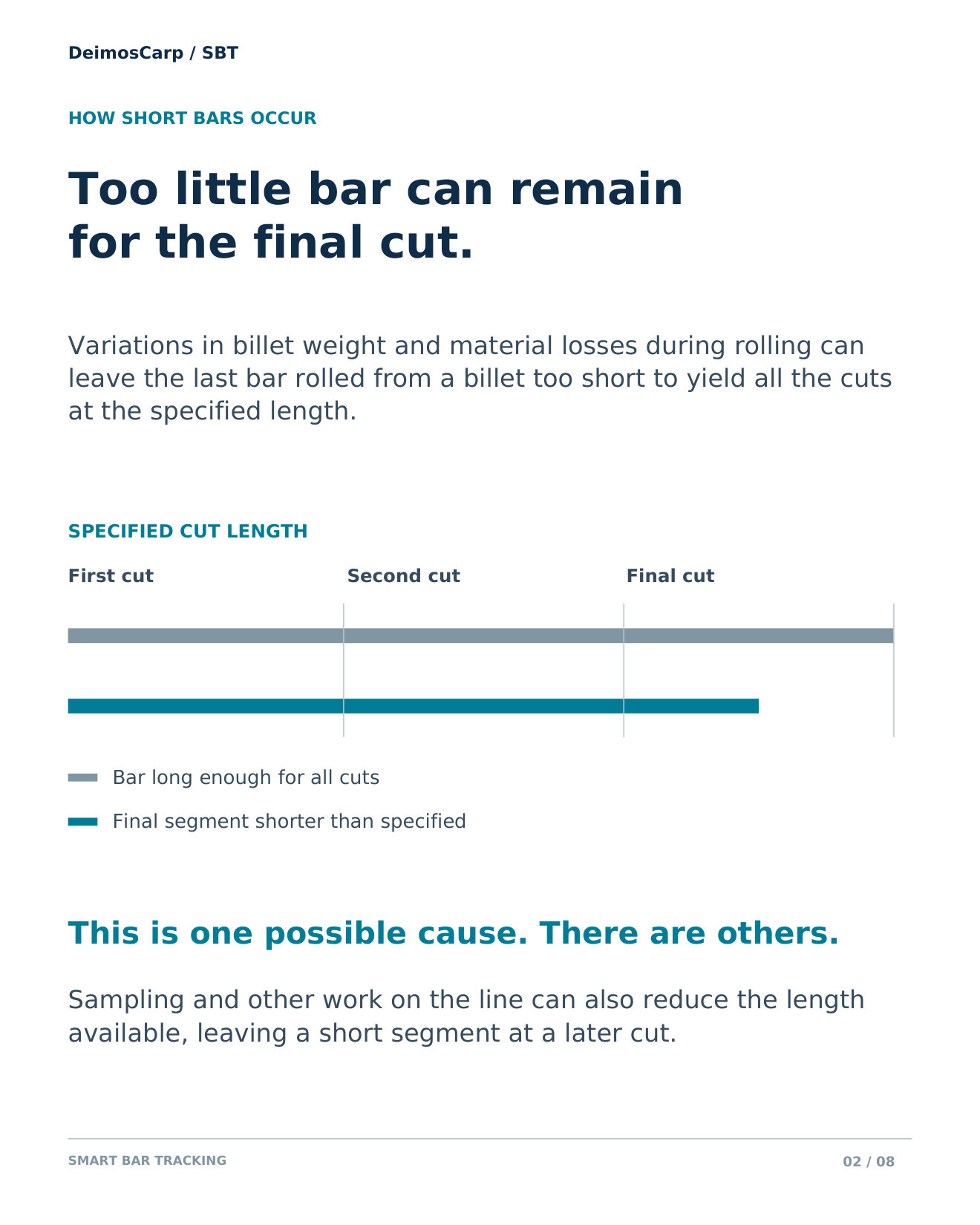
Too little bar can remain for the final cut
Variations in billet weight and material losses during rolling can leave the last bar rolled from a billet too short to yield all the cuts at the specified length.
This is one possible cause. There are others. Sampling and other work on the line can also reduce the length available, leaving a short segment at a later cut.
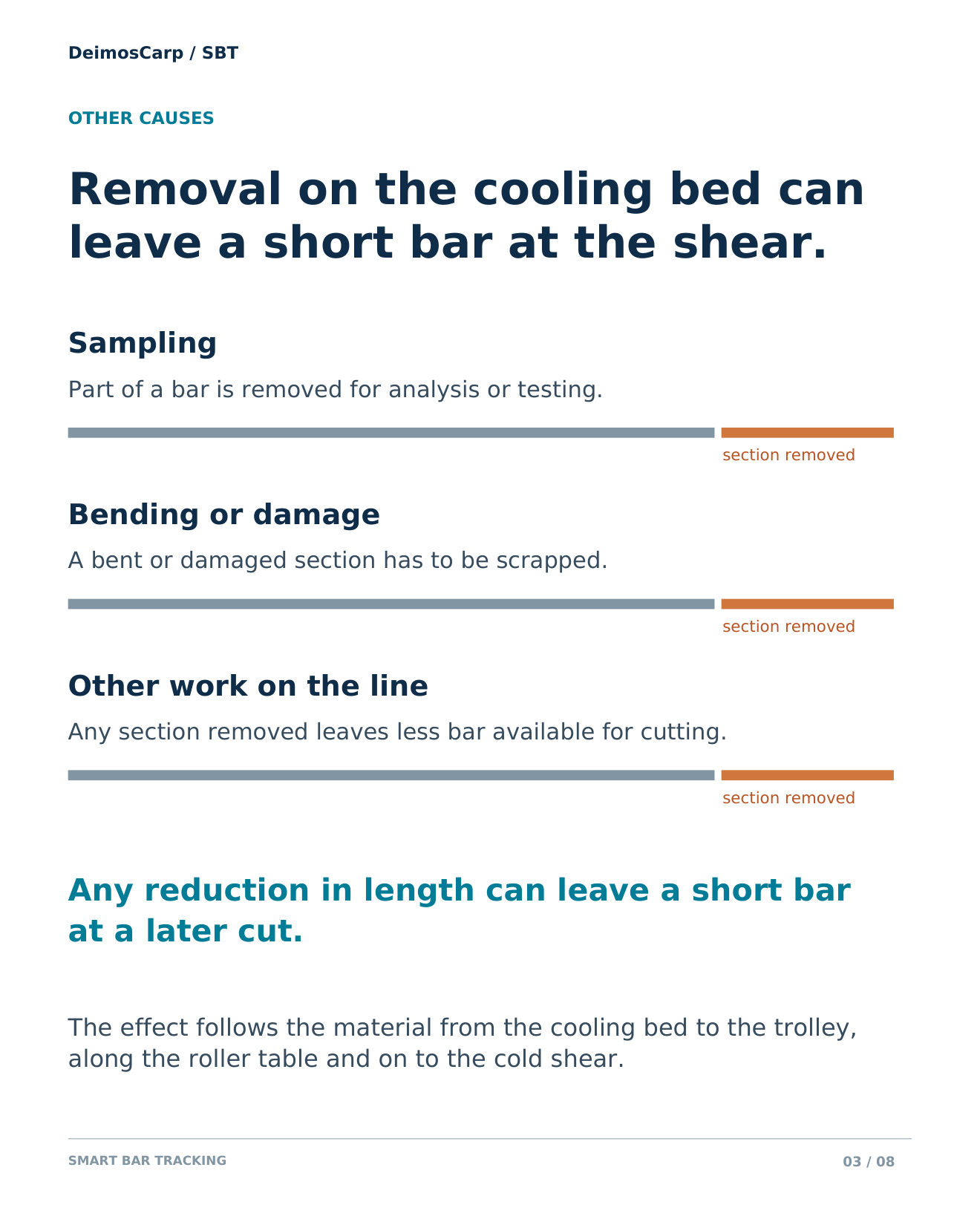
Removal on the cooling bed can leave a short bar at the shear
Sampling: part of a bar is removed for analysis or testing. Bending or damage: a bent or damaged section has to be scrapped. Other work on the line: any section removed leaves less bar available for cutting.
The effect follows the material from the cooling bed to the trolley, along the roller table and on to the cold shear.
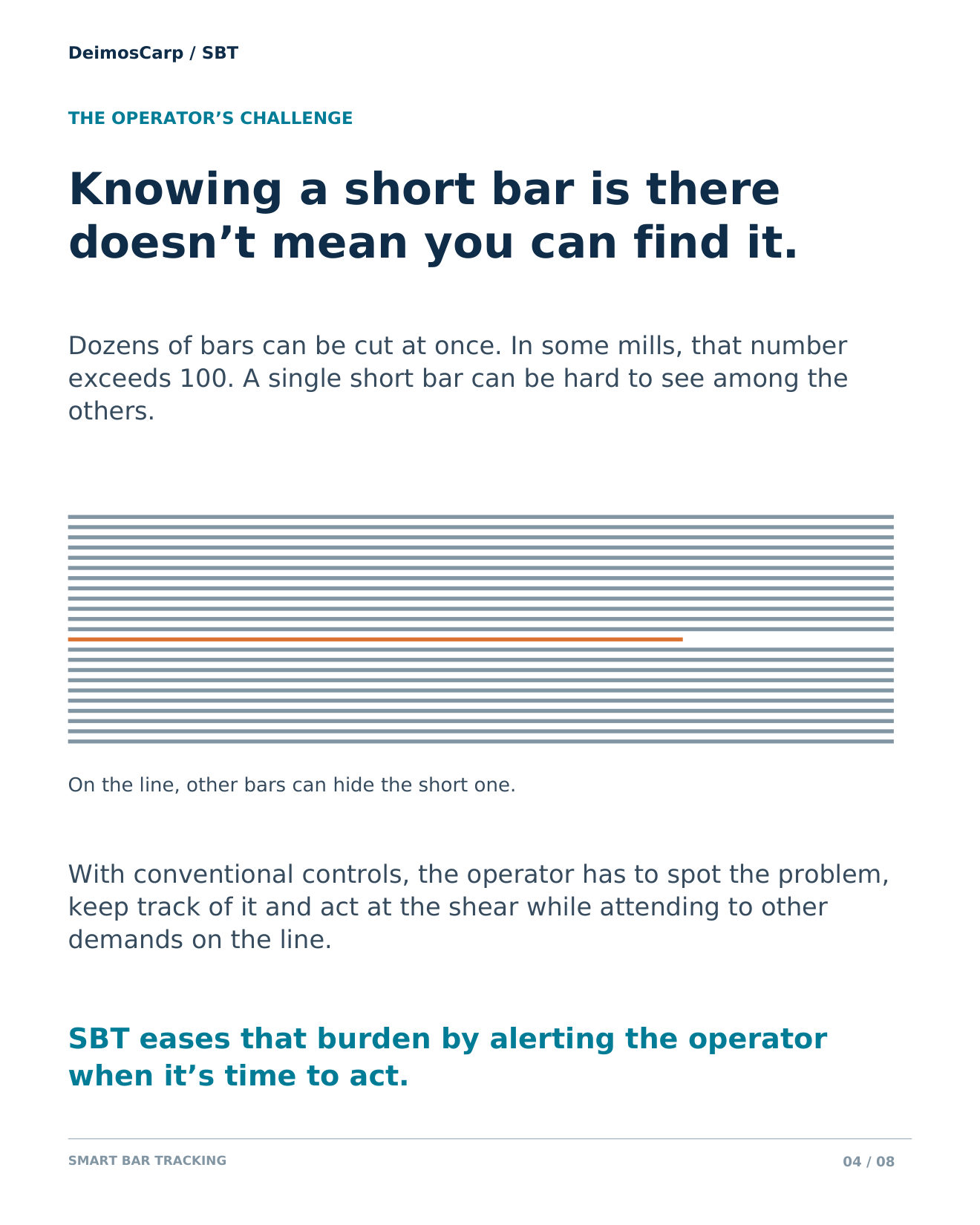
Knowing a short bar is there doesn't mean you can find it
Dozens of bars can be cut at once. In some mills, that number exceeds 100. A single short bar can be hard to see among the others.
With conventional controls, the operator has to spot the problem, keep track of it and act at the shear while attending to other demands on the line. SBT eases that burden by alerting the operator when it's time to act.
The system flags the cut that will produce a short bar
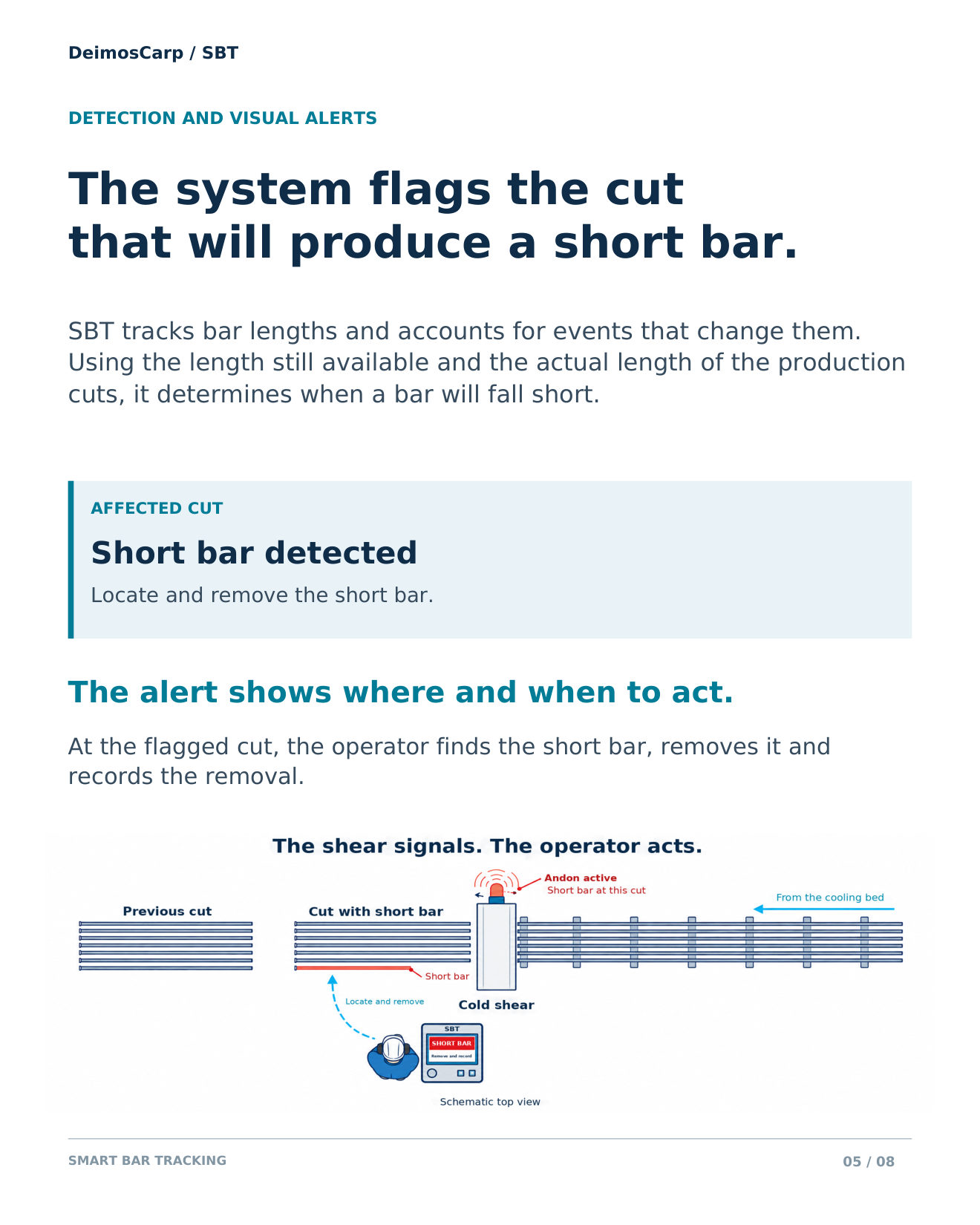
SBT tracks bar lengths and accounts for events that change them. Using the length still available and the actual length of the production cuts, it determines when a bar will fall short.
The alert shows where and when to act. At the flagged cut, the operator finds the short bar, removes it and records the removal.
Two safeguards
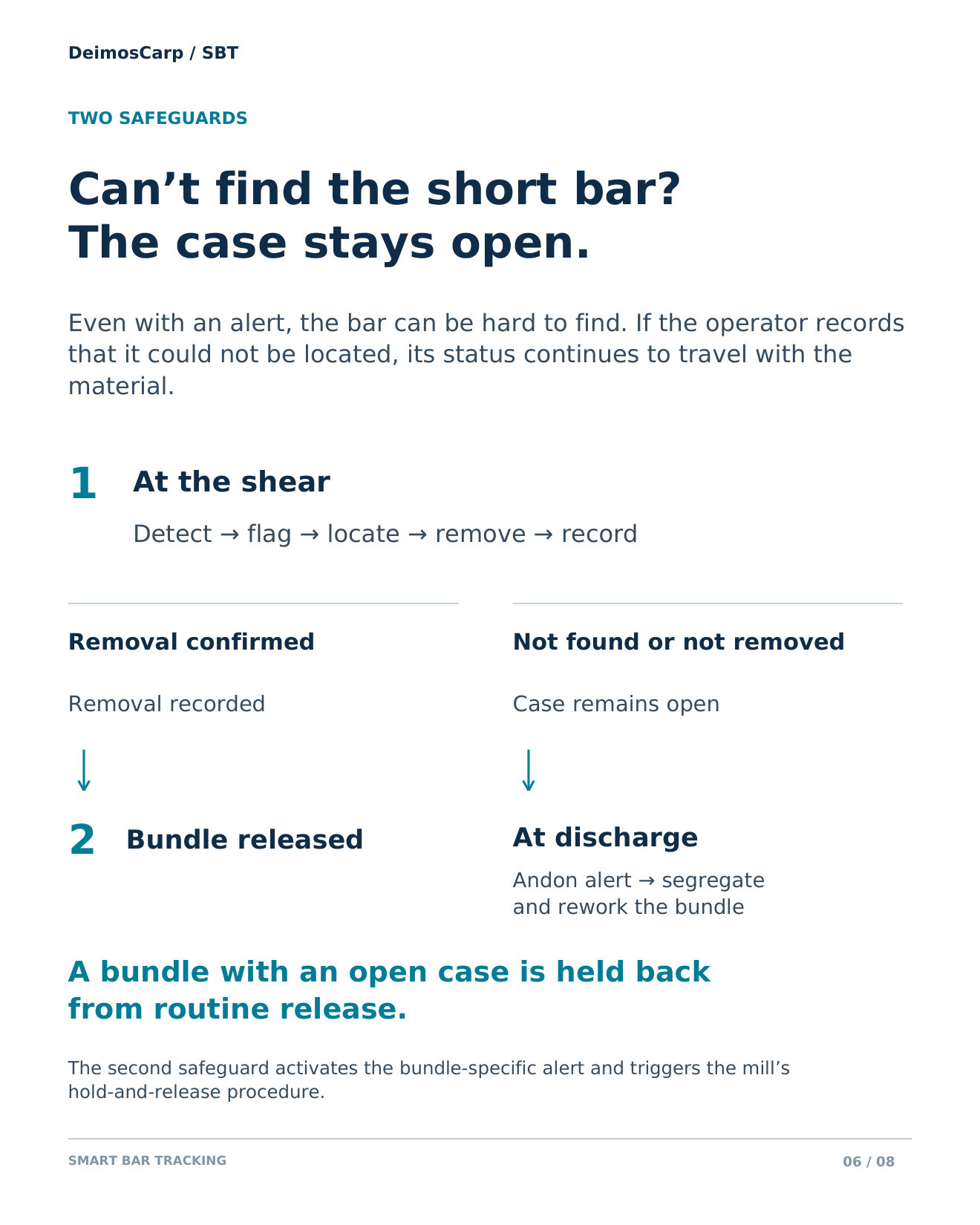
1. At the shear: detect, flag, locate, remove, record. Even with an alert, the bar can be hard to find. If the operator records that it could not be located, its status continues to travel with the material and the case remains open.
2. At discharge: a bundle with an open case is held back from routine release. The second safeguard activates the bundle-specific alert (andon) and triggers the mill's hold-and-release procedure: segregate and rework the bundle.
From an uncertain outcome to a traceable record
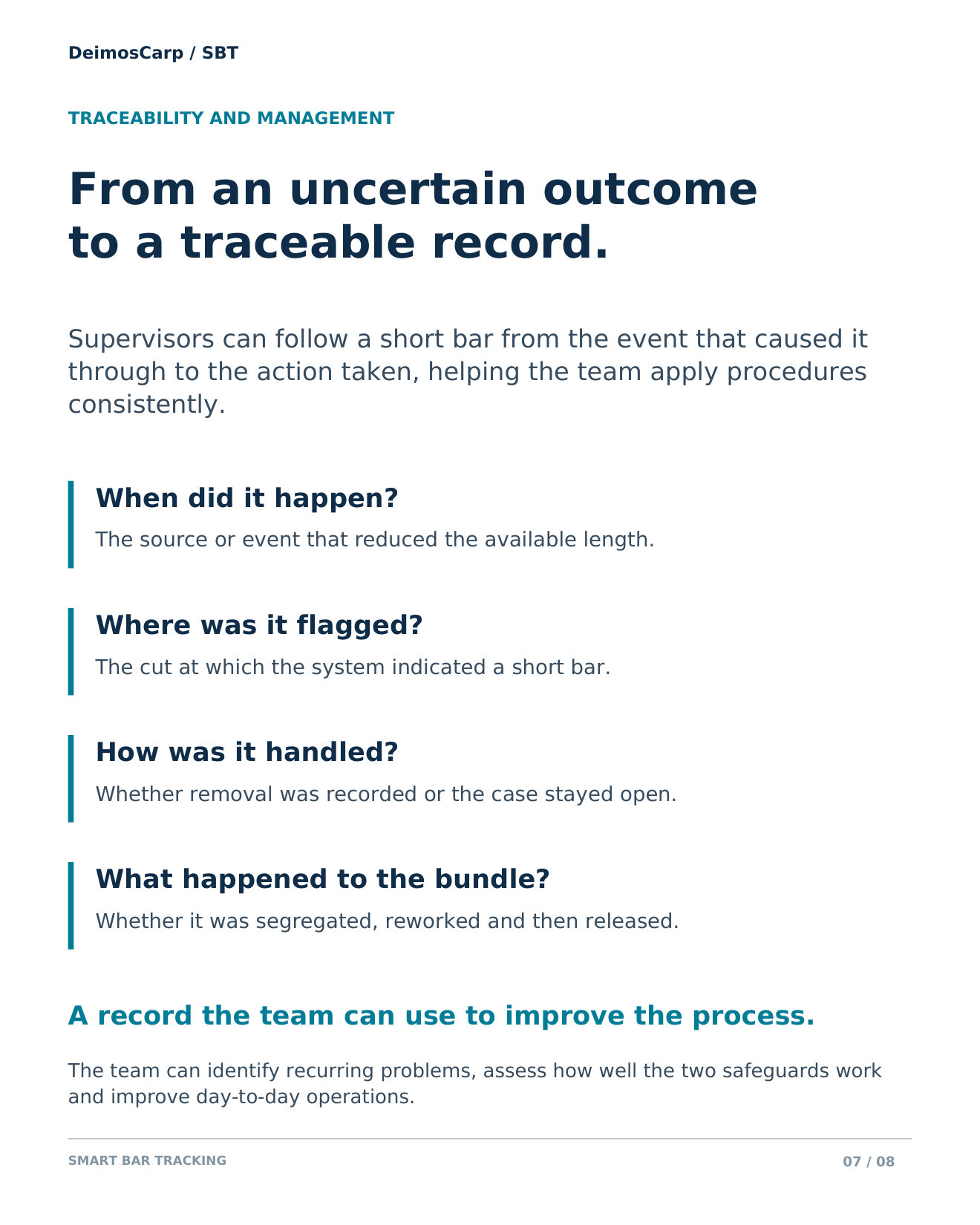
Supervisors can follow a short bar from the event that caused it through to the action taken, helping the team apply procedures consistently: when did it happen, where was it flagged, how was it handled and what happened to the bundle.
The team can identify recurring problems, assess how well the two safeguards work and improve day-to-day operations.
Customer impact
When a short bar reaches a customer, it can lead to a complaint, a hold or return, a credit, extra administrative work and a strained customer relationship. Handling a complaint won't stop a short bar from shipping.
The best short bar to manage is the one the customer never receives. SBT flags the short bar, carries its status forward with the material and keeps the case open until it is resolved.